
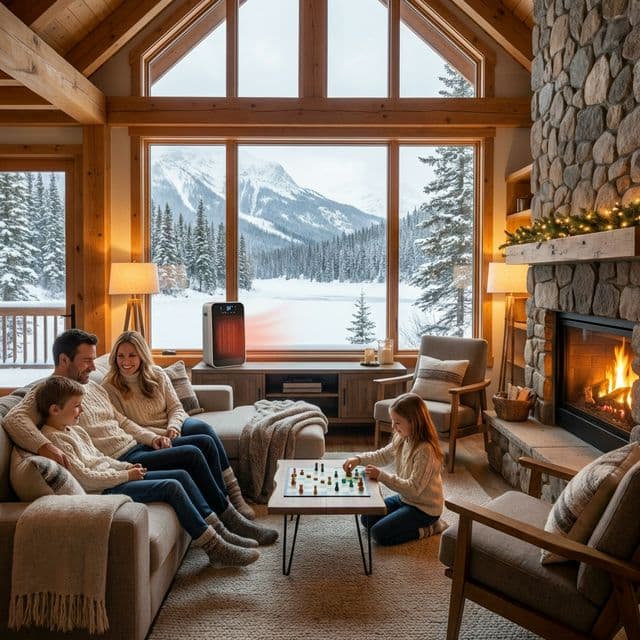
Winter Electricity Bill Radiography: Traditional House vs. Canadian House
When you quote a house, you usually look at the construction price per square meter. But there is a "hidden price" you will pay month after month throughout your life: the cost of living in it. In southern Chile, heating a poorly insulated house can cost more than the mortgage. To understand the upfront investment properly, also review the real cost breakdown of a Canadian house with no fine print.
The Case Study: Temuco, July 2025
We compared two 120 m² homes, located in the same climate zone of Temuco, during the coldest month of the year.
House A: Traditional Construction (Masonry 2010)
- Heating: Wood stove + Support electric heaters in bedrooms.
- Insulation: Simple expanded polystyrene in roof (40mm), walls without specific thermal insulation (only brick and stucco).
- Estimated Monthly Expense:
- 3 meters of firewood: ~$120,000 CLP
- Extra electricity: ~$80,000 CLP
- Total: ~$200,000 CLP / month
House B: Canadian Houses (Model 2025)
- Heating: Inverter Air Conditioning (100% Electric).
- Insulation: R100 perimeter walls (High-density mineral wool), R100+ Roof, Low-E Double Glazed Windows.
- Real Monthly Expense:
- Heating electricity consumption: ~$75,000 CLP
- Total: ~$75,000 CLP / month
Why is the difference so big?
The key is not just generating cheaper heat, but not losing it.
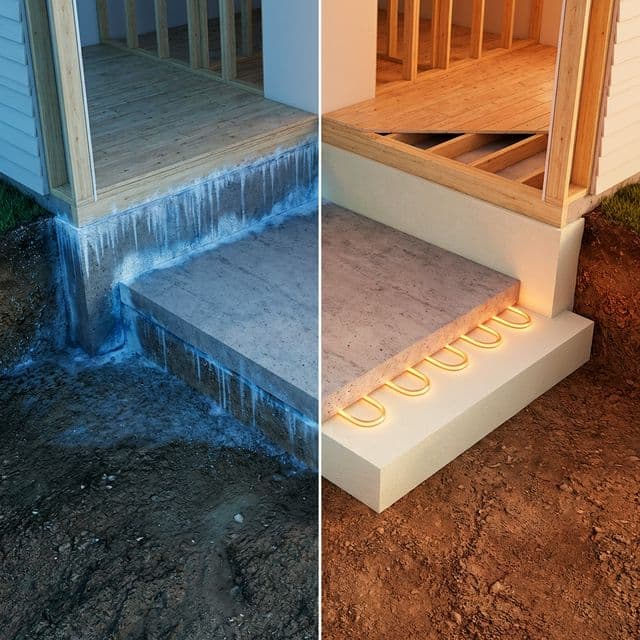
- Airtightness: A Canadian house works like a thermos. Once you reach 20°C, the heating system turns off or works at a minimum (Inverter) because the heat does not escape through walls or roofs.
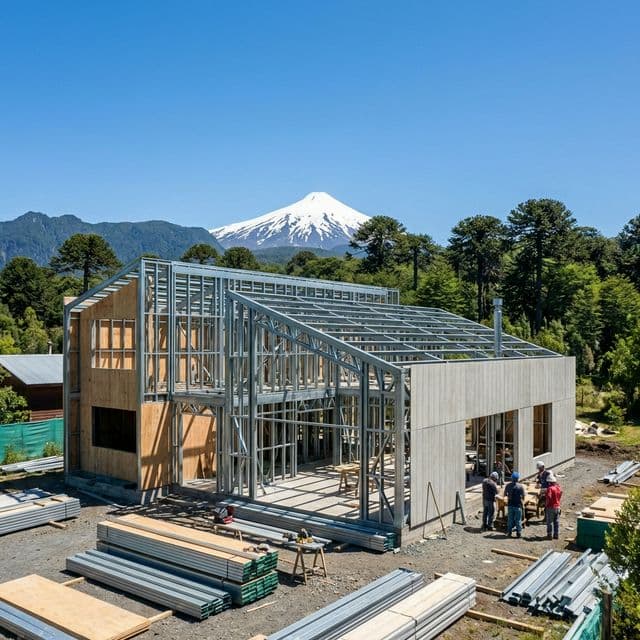
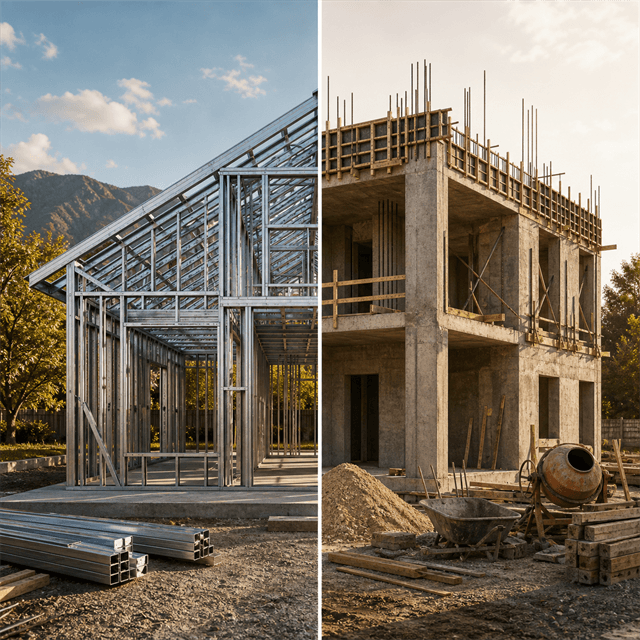
- Thermal Inertia vs. Insulation: The brick house has high inertia (it takes time to heat up and cool down), but it constantly transfers heat outwards. Our Metalcon structure with mineral wool insulates immediately.
- Windows: 30% of heat is lost through single glass panes. Our Low-E double glazing reflects heat back into the interior.
Savings over 10 Years
If we project this difference ($125,000 monthly savings in winter, lower weighted annual average), the savings over 10 years exceed $8,000,000 CLP. That is money that stops being burned in firewood and stays in your pocket, paying for a good part of your initial investment.
Keep reading: estimate your project's upfront investment with our construction cost calculator or review which factors determine your home's price per m².
Ready to build your home?
Calculate your project cost or contact us directly.