
Prefab vs. traditional construction: how to decide in Chile
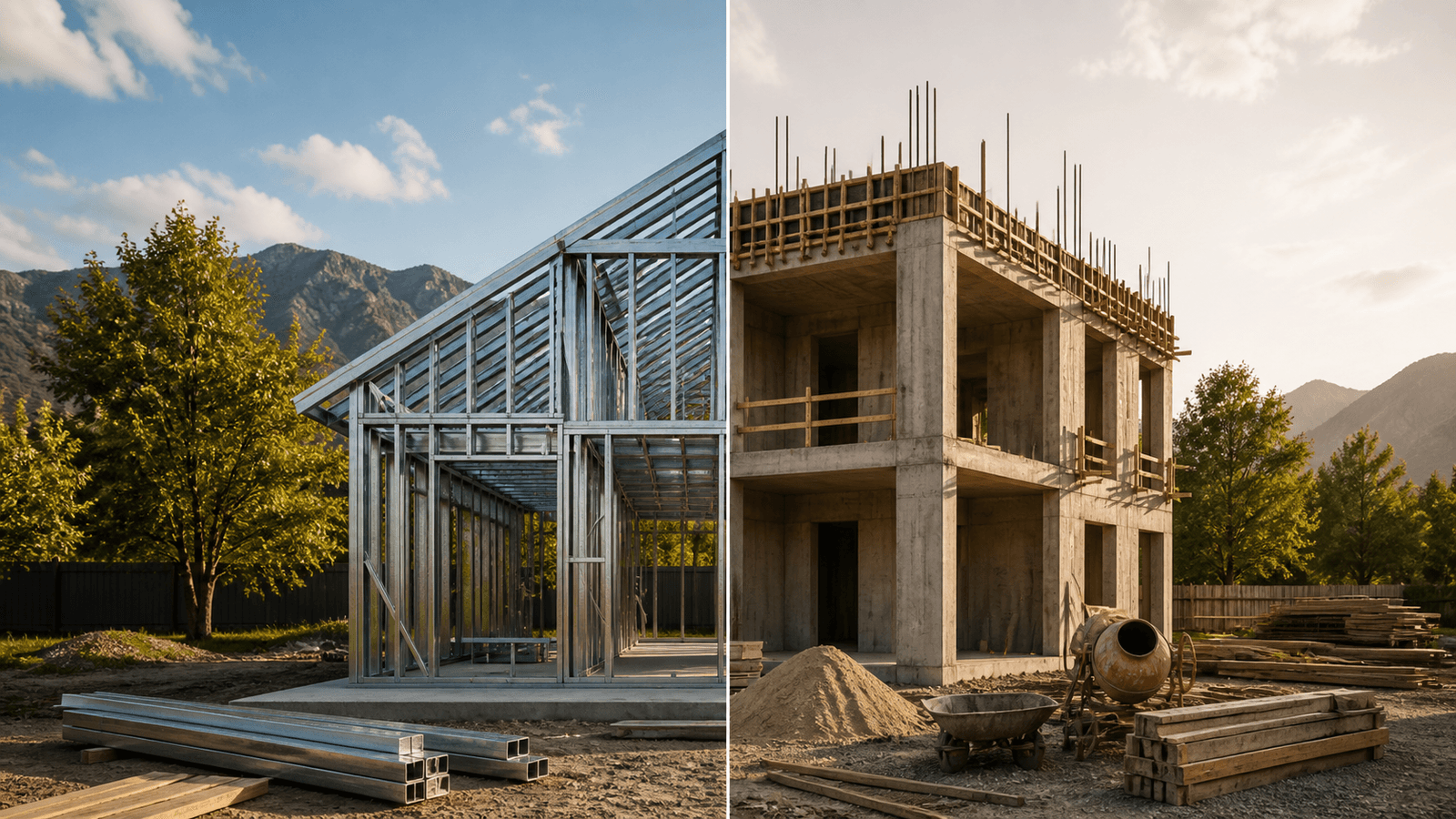
"Prefab" is one of the most misunderstood words in the industry. For many it evokes a low-quality, short-lived house, but industrialized construction to Canadian standard has nothing to do with that image. Let's look at the real comparison against traditional concrete or masonry construction.
What each one means
Traditional construction builds the house entirely on site: slab, masonry or concrete, wall by wall. Industrialized construction (like the Canadian-standard Metalcon system) manufactures structures and panels with precision and assembles them on site, keeping factory quality controls.
Timelines
The difference here is striking. Industrialized construction reduces weather-related downtime and allows parallel progress (structure in the workshop while foundations are prepared). A project that takes many months traditionally is usually delivered in around 5 months of work with the Canadian system.
Cost and predictability
More than being "cheaper," industrialized construction is more predictable. Working with measured materials and standardized processes means less waste and fewer budget surprises mid-build. Uncertainty is one of the most expensive hidden costs of traditional construction. To put concrete numbers on the table, check house construction prices in Chile 2026 per square meter.
Quality and thermal standard
Here the Canadian system pulls ahead:
- Superior insulation: a continuous-insulation envelope keeps the temperature stable and lowers heating bills.
- Seismic behavior: galvanized steel structures are light and resistant.
- Quality control: what's built indoors doesn't depend on rain or on-site improvisation.
Resale value and financing
A common doubt: does an industrialized house have less resale value? No, not if it's well built and has municipal approval. Value is defined by quality, location, and proper documentation, not the construction method. Banks finance both systems with mortgage credit when the company is formalized and the project meets regulations. The same applies when insuring your home: see what insurers require in our guide to home insurance for Canadian-system houses.
Which one suits you?
If you want predictable timelines, thermal efficiency, and an orderly process, Canadian-standard industrialized construction is hard to beat. Traditional construction still makes sense in very specific design or zoning cases. The key is to compare the same scope, not the label.
One of the doubts that most holds back this decision is cost: we clear up the myths in prefab Canadian house: myths and realities about price. And if you already know what you want, explore our turnkey houses and prices built with the Canadian system.


Ready to build your home?
Calculate your project cost or contact us directly.