
Prefab Kit vs Turnkey House: the Real Total Cost in Chile
If you've priced houses online, this has surely happened to you: a prefab kit shows up at a price that looks unbeatable. Half, sometimes a third, of what a finished house costs. The temptation is immediate. But that number hides a catch that isn't always explained clearly: it's the price of part of a house, not of the house. And the difference between the two gets paid later, on site, once you've already signed.
In this article we take the comparison apart piece by piece so you can put both numbers on the table under equal conditions: what a kit costs once it's finished and livable, versus what a turnkey house with a closed price costs.
What a typical prefab kit includes (and what it doesn't)
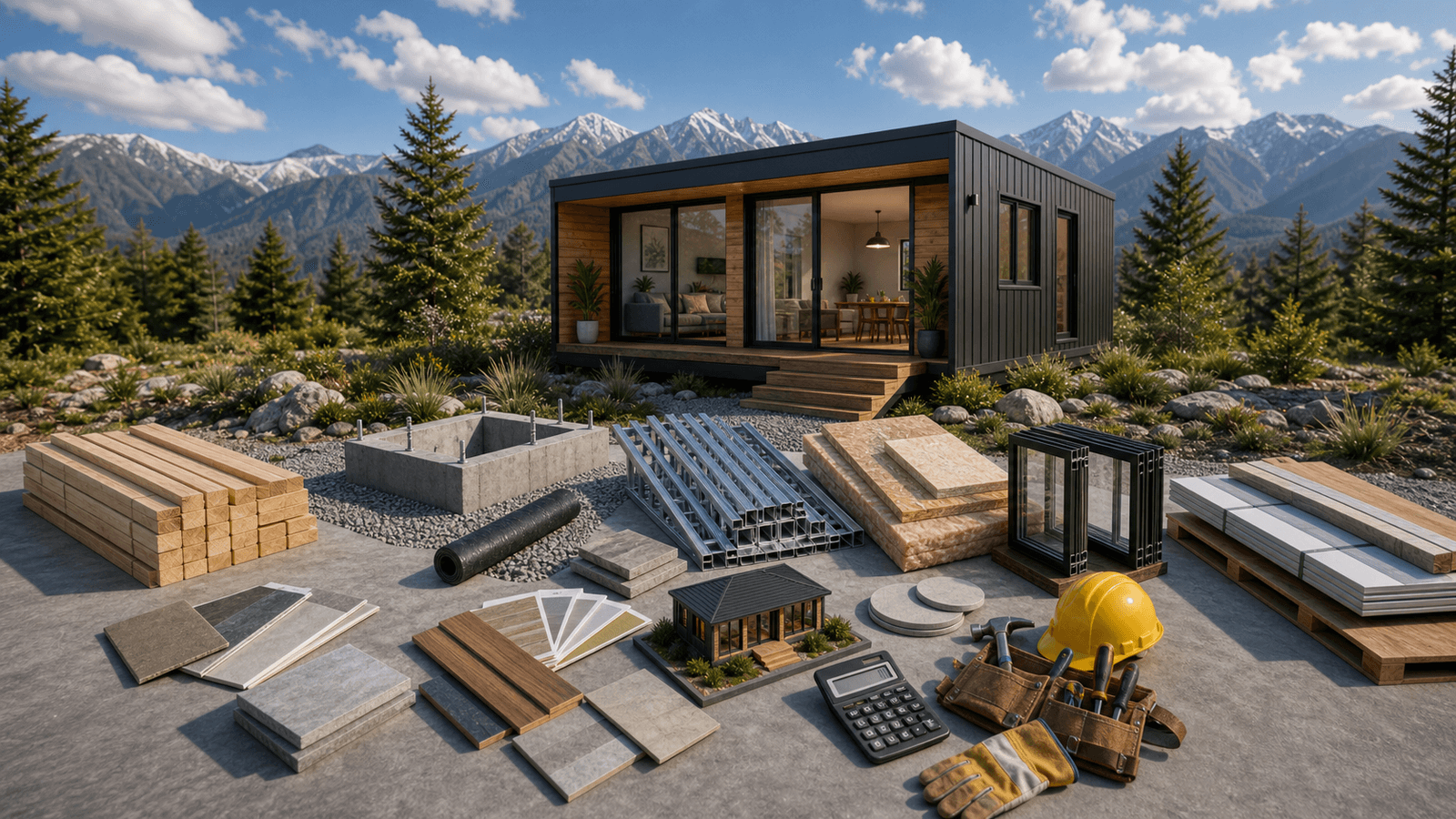
A kit on the market usually includes the home's structure and panels: walls, partitions, sometimes the roof and windows, delivered as a package of parts to assemble. That's real and it has value. The problem is everything left out, because each of those items is a cost you'll have to solve and pay on your own:
- Transport: the kit is delivered at the factory or a dispatch point. Getting it to your land, especially on rural plots or sites with difficult access, is on you and depends on distance, tonnage, and the machinery needed to unload.
- Foundations and slab: no kit includes the base it sits on. You need a slab or foundations engineered for your soil type, with their own design, materials, and labor. Without this, the kit is a stack of panels.
- Assembly and labor: "easy to assemble" doesn't mean it assembles itself. Erecting a home requires experienced crews, tools, supervision, and weeks of work. If the assembly is done poorly, leaks and misalignments show up in the first winter.
- Plumbing and electrical installations: drinking water, sewage, electricity, gas. These are separate projects, with separate materials, executed by authorized installers with their own certifications. None of it comes in the box.
- Finishes: flooring, paint, bathroom fixtures, kitchen, interior doors, closets. The difference between a closed shell and a house you can live in is largely here.
- Municipal permits and regularization: the building permit, architectural design, structural engineering, and final municipal sign-off are your responsibility. Without that sign-off, the house can't be properly insured, sold, or financed.
- Contingencies: when you're the one coordinating builders, installers, and suppliers separately, every miscoordination turns into lost days and extra spending. Nobody answers for the whole, so the contingencies land on you.
None of this means kits are a scam. It means the kit's price and the finished house's price are two different numbers, and the gap between them is usually far wider than the advertising suggests.
The real cost is measured finished
The only honest comparison is between homes that are ready to live in, with municipal approval, certified installations, and finishes included. That's where the turnkey model comes in: one contract, one responsible party, and a closed price that covers everything from the foundations to the handover of the keys.
So you have a concrete, transparent reference: at Canadian Houses our turnkey homes start from 24 UF/m² in American style and from 28 UF/m² in Mediterranean style in the essential category. That figure is for the finished house, not for one stage. You can see the full breakdown of values by style and category in our 2026 construction price guide.
When you run the full exercise with a kit — kit plus transport, plus slab, plus assembly, plus installations, plus finishes, plus permits, plus contingencies — the result usually ends up fairly close to the value of a turnkey house, but with one key difference: along the way you were the site manager, you carried the risks, and nobody signed off on a total price up front. With a closed price, you know from day one what your finished house costs.
If you want to put numbers on your own project, our construction cost calculator gives you an estimate by square meters, style, and region, with no fine print.
Checklist: 8 questions before buying a kit
If you're evaluating a kit anyway, these questions will save you surprises. Ask for every answer in writing:
- Is transport to my land included? If not, who quotes it and who answers if it arrives damaged?
- Does it include a slab or foundations? If not, does the seller at least provide the technical specifications the base must meet?
- Who assembles the house? The same company, a recommended crew, or do you have to find one yourself? Who answers if the assembly is defective?
- What's the real timeline until I can live in it? Not the kit's delivery time: the timeline with assembly, installations, and finishes included.
- What exactly does the warranty cover? Just the panels? The assembly? Leaks? A warranty that only covers the material leaves out almost every real-world problem.
- Are plumbing and electrical installations contemplated? With authorized installers and certificates involved?
- Who handles the building permit and municipal sign-off? Are the architectural design and structural engineering included, or do you pay for them separately?
- How much does all of the above add up to? Ask for the final number, finished and livable house, and compare it against a turnkey alternative with the same scope.
If the seller can't answer these questions clearly, that evasiveness is information too.
Direct dealing, no middlemen
There's another factor that almost never shows up in the comparison: who you're actually talking to. The market is full of portals and resellers that capture your quote request and pass it on to third parties, adding commissions along the way or reselling your data as a "lead" to several companies at once. The result: insistent calls from people you never contacted and prices inflated to cover the middlemen.
Quoting directly with the company that designs and builds your house removes those layers. You talk to the people who will be on your land, information doesn't get distorted between intermediaries, and the price you're given is the price of building, not the price of building plus the margin of someone who merely passed along your details. In a project where every decision matters, having a single party responsible from start to finish is not a detail: it's the difference between managing someone else's build yourself and receiving your finished house.
Before deciding, run the full comparison: review exactly what a turnkey house includes and contrast that scope, point by point, against the list in this article. With both finished numbers on the table, the decision makes itself.

Ready to build your home?
Calculate your project cost or contact us directly.