
Right of Way: Securing Access to Your Land Before You Build
Right of Way: Securing Access to Your Land Before You Build
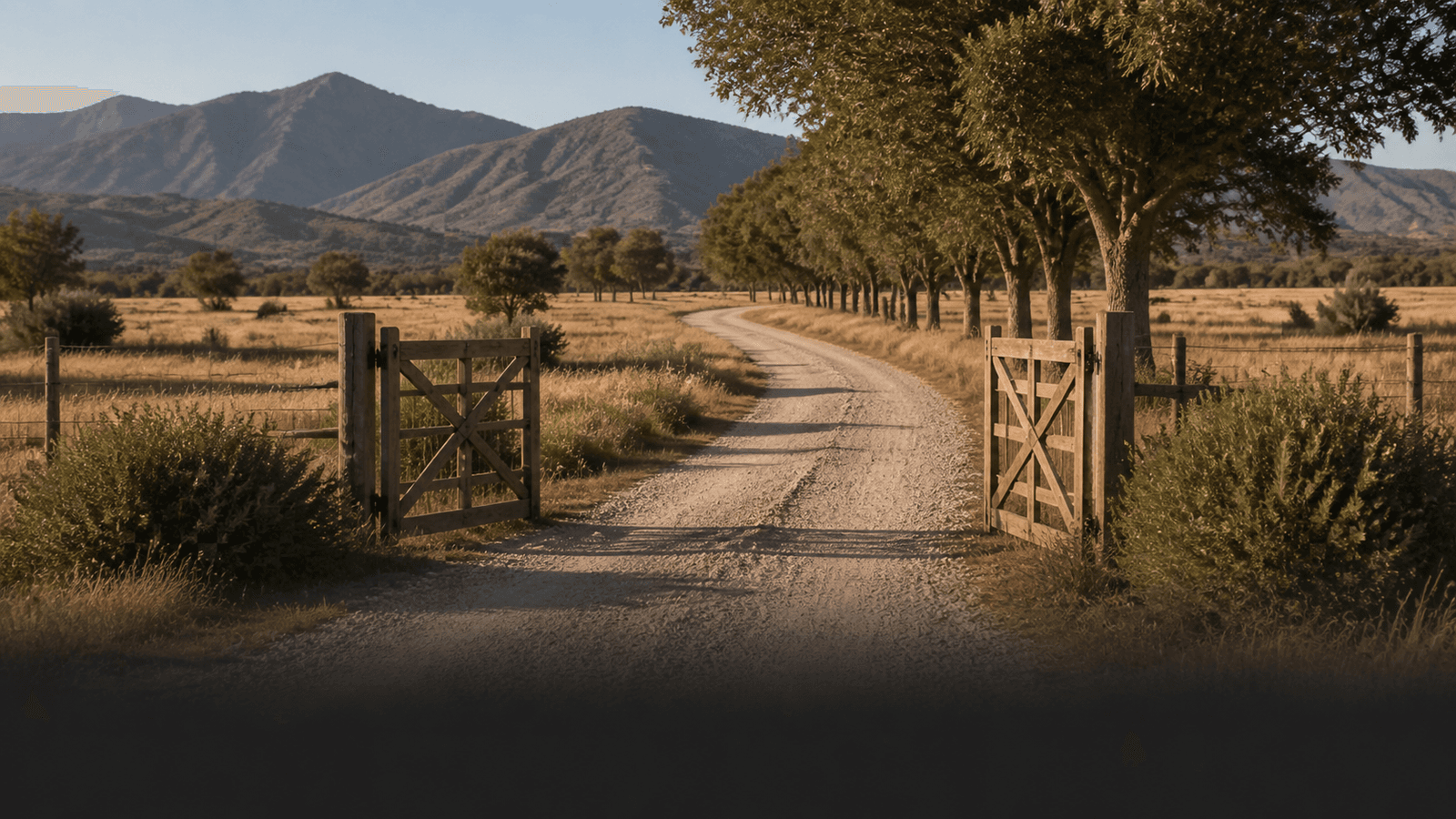
There is one problem that always shows up at the worst moment: the plot is perfect, the price is good, there is a dirt track that gets you there without trouble… and that track crosses the neighbour's property with no document backing it up.
Access is a condition for building, not a logistical detail. Without legal access, the Municipal Works Department can object to the project, the bank may not lend, and the day the neighbour changes their mind — or sells — you are left with no way into your own house.
Reference information; this is not legal advice. Every case depends on the titles of the properties involved; consult a lawyer before buying or creating a right of way.
What a right of way is
It is a real right that burdens one property for the benefit of another. In simple terms: the servient property accepts being crossed, and the dominant property has the right to cross it. It is not a personal permission from the current owner: it is a charge on the land itself, which is why it survives if the neighbour sells.
That is exactly the difference from a verbal agreement, and it is the whole difference.
A track in use is not a right of way
That it has been used for thirty years, that it is marked, that everyone calls it "the road", that it shows on Google Maps: none of that makes it a right. A track in use is the owner's tolerance, and tolerance can end.
It is probably the most repeated point in our checklist before buying a plot, and the one most people skip because on viewing day the access worked perfectly.
How it is created
There are two routes:
- By agreement between the parties, which is the normal path. A public deed is signed and registered with the Real Estate Registrar. Both steps are necessary: an unregistered deed does not produce the effect you need against third parties.
- Through the courts, where there is no agreement. Chilean law provides that a property left without communication to a public road can obtain passage across neighbouring properties, with the corresponding compensation. Slower and more expensive, but it exists.
What it must say — and here is what gets forgotten
A badly drafted right of way causes problems years later. What should be written down:
- The exact route, with a plan, not a description like "along the side of the fence".
- The width. Pedestrian access is no use for bringing in a materials truck. If you are going to build, the width has to allow machinery and lorries, not just your car.
- Who maintains the road and how the costs are shared.
- That it allows services to pass. This is the most forgotten one: if electricity or water have to come in that way, the right of way must say so expressly. A right of passage does not automatically authorise burying a pipe or running a cable.
- That it is perpetual rather than time-limited, unless there is a concrete reason otherwise.
Why it matters before subdividing
If you are considering subdividing land, every resulting lot must have access to a public road. Dividing and leaving an inner lot without its own access creates a property that neither sells well nor can be built on. The right of way is resolved in the same act as the subdivision, not afterwards.
What to check before signing the purchase
- Request the property's certificate of mortgages and encumbrances: registered rights of way appear there, both those that benefit you and those that burden you.
- Check that the registered right of way matches the track actually in use. They sit in different places more often than you would think.
- Verify the width against what the build will need.
- If the property is rural, cross-check this with everything else in rural land and the role of the SAG.
And if the land is already yours and access is unresolved
It is worth tackling before any design begins. It is part of the feasibility review we carry out at the outset, alongside land use and service availability, and it gets resolved at preliminary design stage.
Unsure about access to your land? We review feasibility before designing, as part of architecture services. See also where we build or write to us.

Ready to build your home?
Calculate your project cost or contact us directly.