Rural Land: What You Can Build and When the SAG Gets Involved
Rural Land: What You Can Build and When the SAG Gets Involved
This is one of the questions we get most: someone buys a beautiful plot, with a view and good access, and only afterwards discovers that building on it comes with conditions they did not expect. Rural land in Chile does not work like urban land, and the difference is not procedural: it is fundamental.
Reference information. Each case is resolved by the Municipal Works Department and the relevant sector agencies according to the specific property; confirm before buying or commissioning a design.
Rural means "outside the urban boundary"
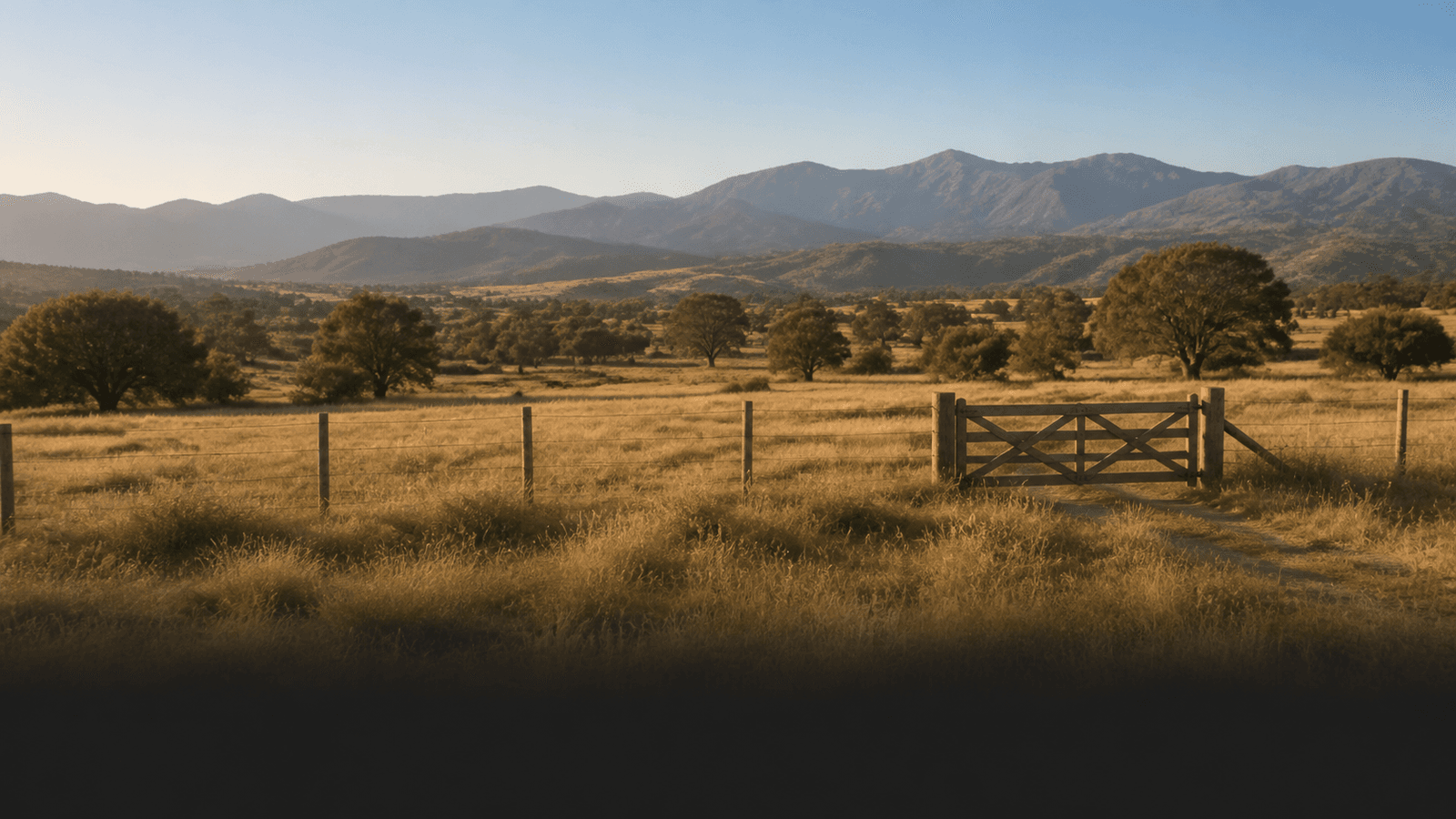
It has nothing to do with whether there are cows nearby. A property is rural when it falls outside the urban boundary set by the municipality's planning instrument. You can be fifteen minutes from a city and still be on rural land, and that changes the rules.
Outside the urban boundary, the general principle of the General Law of Urbanism and Construction is that land is destined for agricultural and forestry activity. Building something else is not forbidden, but it stops being automatic: it starts requiring authorisations.
Where the SAG comes in
The Agricultural and Livestock Service is the agency that assesses the impact of taking land out of its agricultural purpose. When a project requires a change of land use, a report is requested from the SAG, and the final authorisation is resolved by the relevant Regional Ministerial Secretariat together with the Municipal Works Department.
The practical question is not "do I need the SAG?", but "does what I want to do require a change of use?". That depends on the purpose of the building: a home for the owner is not assessed the same way as a tourism project, a public facility or a productive installation.
What to ask before buying
- What is the land use of the property under the planning instrument currently in force?
- Is there any protection or risk zone over it? Watercourses, ravines, ecological protection or landslide risk can restrict where the house sits, or rule it out.
- Does the property have access to a public road? If access runs through third-party land, check that a registered right of way exists, not a verbal agreement.
- Are services available? Water, electricity and a wastewater solution accepted by the authority.
- Does the area meet the minimum? On rural land it is 0.5 hectares per property, which we cover in the guide to subdividing land.
Water is what stops most projects
It is always underestimated. A well on the neighbouring property does not mean you have a right to water, and water and sanitation feasibility is a requirement for the final approval of the works, not a detail to sort out later. If the property has no mains connection, it has to be solved with a well and its pumping system, and that carries cost, time and sometimes an uncertain outcome.
The same goes for wastewater: on rural plots this usually means a certified septic tank with a properly sized drainage field, not just any installation.
What can be built without complications
A single-family home on a plot that meets the minimum size, with access and services resolved, is the usual scenario and it is perfectly viable. A good share of our builds sit exactly there: countryside plots where the house is the only building on the property.
What requires more analysis is anything further from that: several dwellings on one property, commercial or tourism use, or building on protected land. There the correct order is ask first, buy second.
Why this belongs in the preliminary design stage
All of these questions are answered well before the final house is drawn. That is exactly the purpose of the preliminary design: confirming with the authority what is possible before investing in a full project. Once resolved, the path continues with the building permit.
Have a plot and are unsure what can be done with it? Our architecture services team starts by reviewing feasibility. See also where we build or write to us.

Ready to build your home?
Calculate your project cost or contact us directly.