Green Pine in the Structure: The Hidden Risk of Budget Houses
When you compare offers to build your house, the price difference between two proposals is rarely just in the finishes. It is often hidden in something you will never see once the work is done: the structural material. And one of the market's quietest cost cuts is using "green" dimensioned lumber in walls and roof framing. It sounds harmless. It is not.
What "green" dimensioned lumber is
At lumber yards and hardware stores, dimensioned pine is sold in two very different states: kiln-dried and green. Green lumber is freshly sawn wood that never went through a controlled drying process: it leaves the sawmill carrying much of the water the standing tree had, with a moisture content far above the fiber saturation point.
Kiln-dried lumber, by contrast, is stabilized in drying chambers until it reaches an equilibrium moisture close to that of the environment where it will be installed. That process costs energy, time, and losses, which is why dry lumber is more expensive than green. To the naked eye they can look the same; the difference shows in the weight, the feel, and above all, in how they behave afterwards.
What happens when it dries inside your house
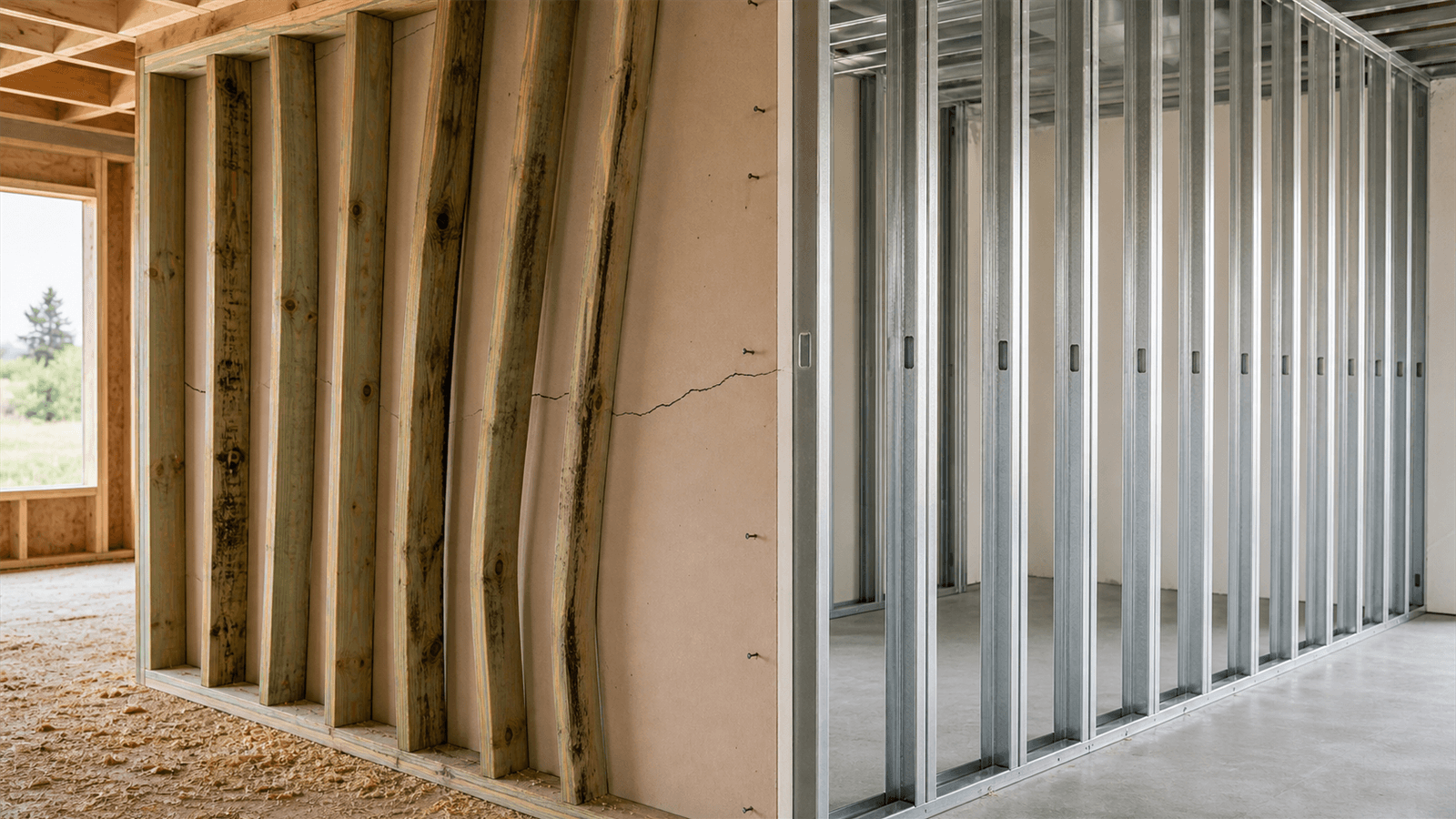
Wood always seeks equilibrium with the humidity around it. If it enters the site green and gets sealed inside finished walls, it will lose that water no matter what: but it will do so after the house is painted, occupied, and heated. And as it dries, wood shrinks, and it does not shrink evenly.
The consequences are familiar to anyone who has worked on site:
- Twisting and warping: studs bow and rotate as they lose moisture, throwing the whole partition out of line.
- Cracks and fissures: shrinkage splits the wood itself and cracks the gypsum boards fastened to it.
- Nails and screws working loose: as the wood's cross-section shrinks, fasteners lose their grip and the classic "popped nails" appear on walls and ceilings.
- Doors and windows that stop fitting: if the frame was mounted on a partition that later moved, misalignment is a matter of months.
- Fungi and rot: if damp wood ends up trapped between boards and membranes without a chance to dry properly, you get perfect conditions for mold, stains, and a persistent damp smell.
None of this is a "rare" defect or bad luck: it is the normal physical behavior of wet wood as it dries. The problem is not the wood; it is where and how it was used.
Why some budget kits use it
The answer is simple: cost. Skipping kiln drying makes the material cheaper, and across an entire structure that difference shows in the offer's final price.
Let's be fair: green lumber has perfectly legitimate uses. It is used in formwork, fences, temporary works, and in ventilated elements where it can air-dry with no consequences for anyone. The critical point is different: using it as residential structure that will be sealed inside finished walls. There, the initial saving turns into cracks, misalignments, and repairs paid by the homeowner, not the supplier.
That is why, when a market offer looks too convenient compared to a turnkey proposal with clear prices and scope, it is worth asking where the difference comes from. Sometimes it comes exactly from here.
The alternative: galvanized steel structure (Metalcon)
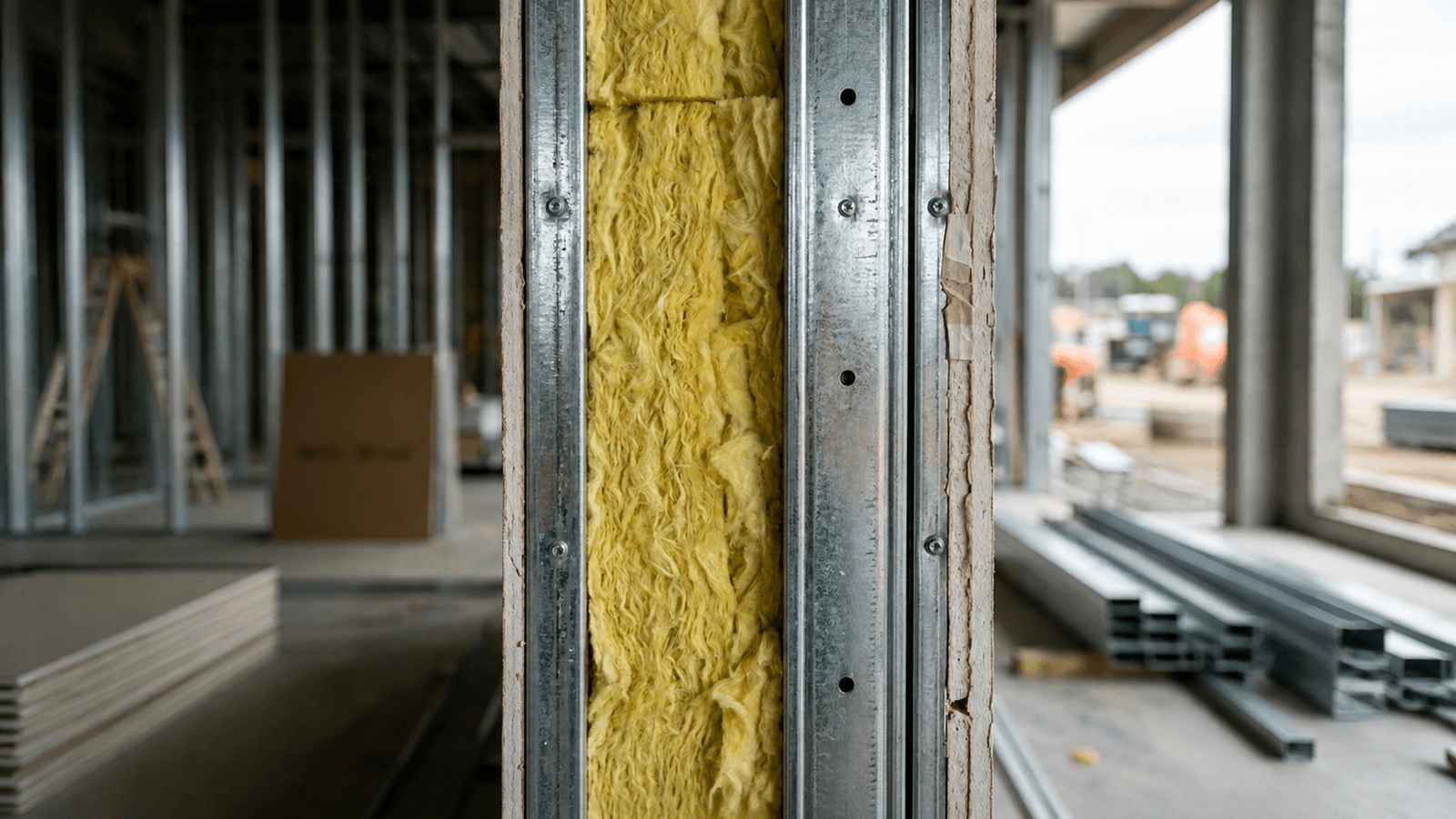
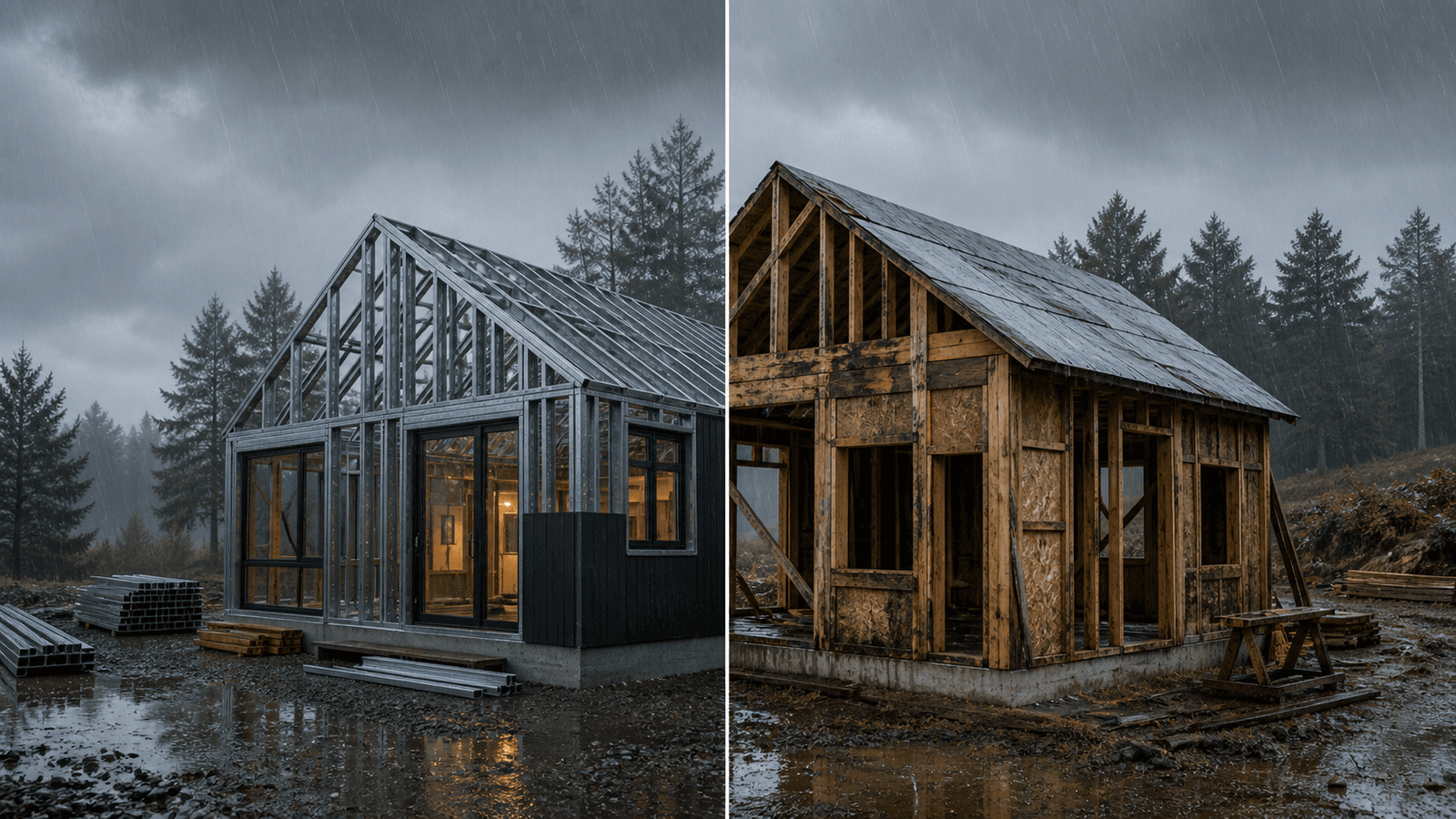
At Canadian Houses we solved this problem at the root: our houses are framed with galvanized steel profiles (Metalcon), a material that simply has no moisture content to lose.
- Dimensional stability: steel does not shrink, twist, or "work" with the seasons. The partition that was mounted straight is still straight ten years later.
- No food for pests or fungi: it is an inorganic material; termites cannot eat it and fungi cannot grow on it, as we explain when debunking the myths about fire and termites in the Canadian standard.
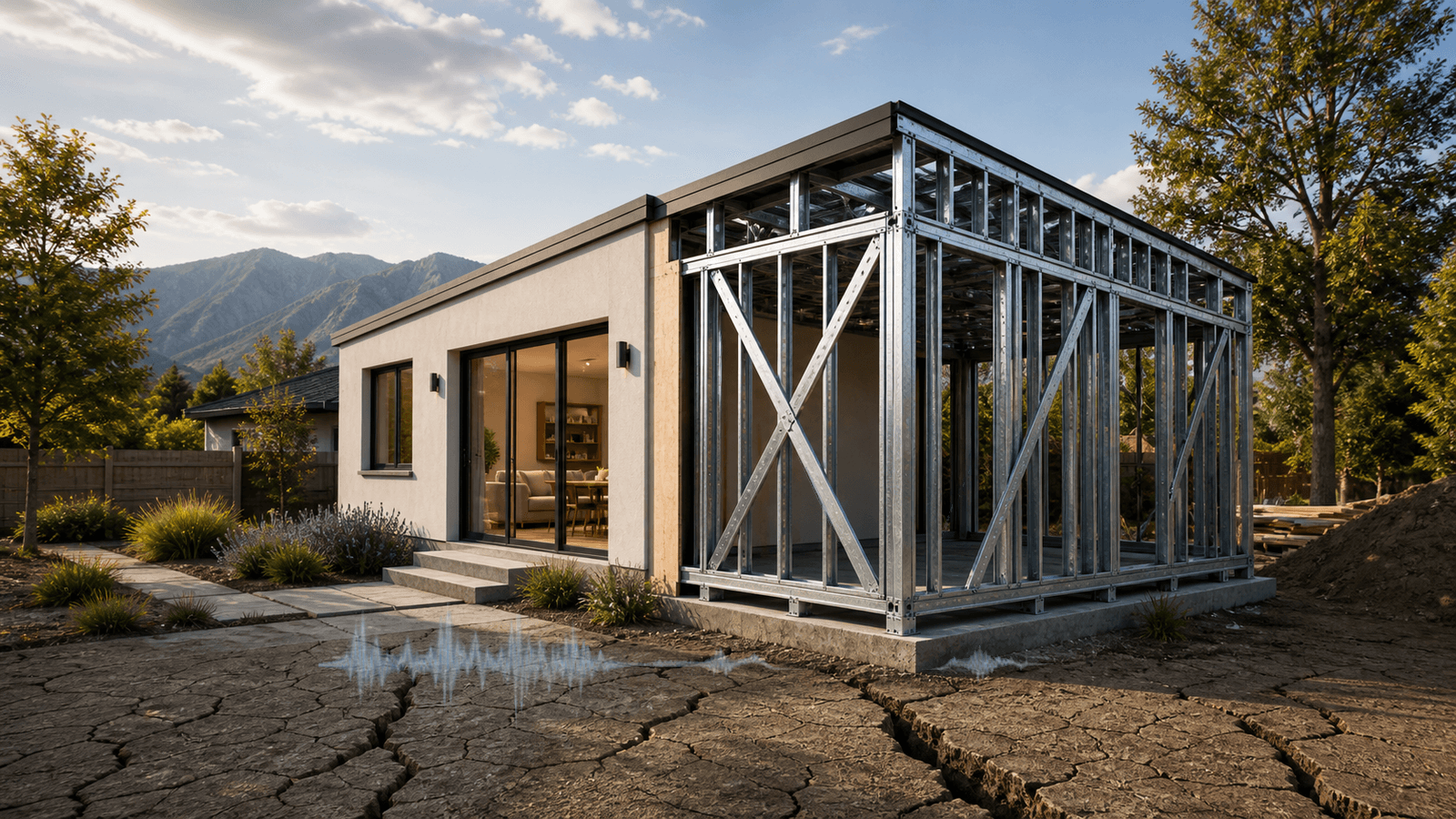
- Consistent, certifiable quality: the profiles are industrially manufactured to exact dimensions, and the complete structure is backed by structural engineering — essential in a seismic country like Chile. We cover it in our article on the seismic resistance of Metalcon houses.
And the price? Building with a stable structure is not a luxury: our Esencial category starts at 24 UF/m² in American style and 28 UF/m² in Mediterranean style, turnkey. If you are also weighing quality kiln-dried wood against steel for rainy climates, see our comparison of Metalcon vs wood in southern Chile.
How to verify it before buying
You don't need to be an expert to protect yourself: you need to ask the right questions and get the answers in writing.
- Is the structural lumber kiln-dried or green? Ask directly. A vague answer is already information.
- What is its moisture content and who certifies it? A serious supplier can state the material's condition and back it up.
- Is the lumber structurally graded? Not all dimensioned lumber qualifies for structural use.
- Is the structure backed by calculations signed by a professional? This applies equally to wood or steel: no calculations, no accountability.
- Is everything in the contract's technical specification? If the structural material is not in writing, assume anything could arrive on site.
The structure is the one part of your house you will never be able to change later. Finishes get renewed, paint gets refreshed, kitchens get modernized; the skeleton stays there forever. Choosing it well — and verifying it before signing — is the most profitable decision of the entire project.
Ready to build your home?
Calculate your project cost or contact us directly.